Galileo
-
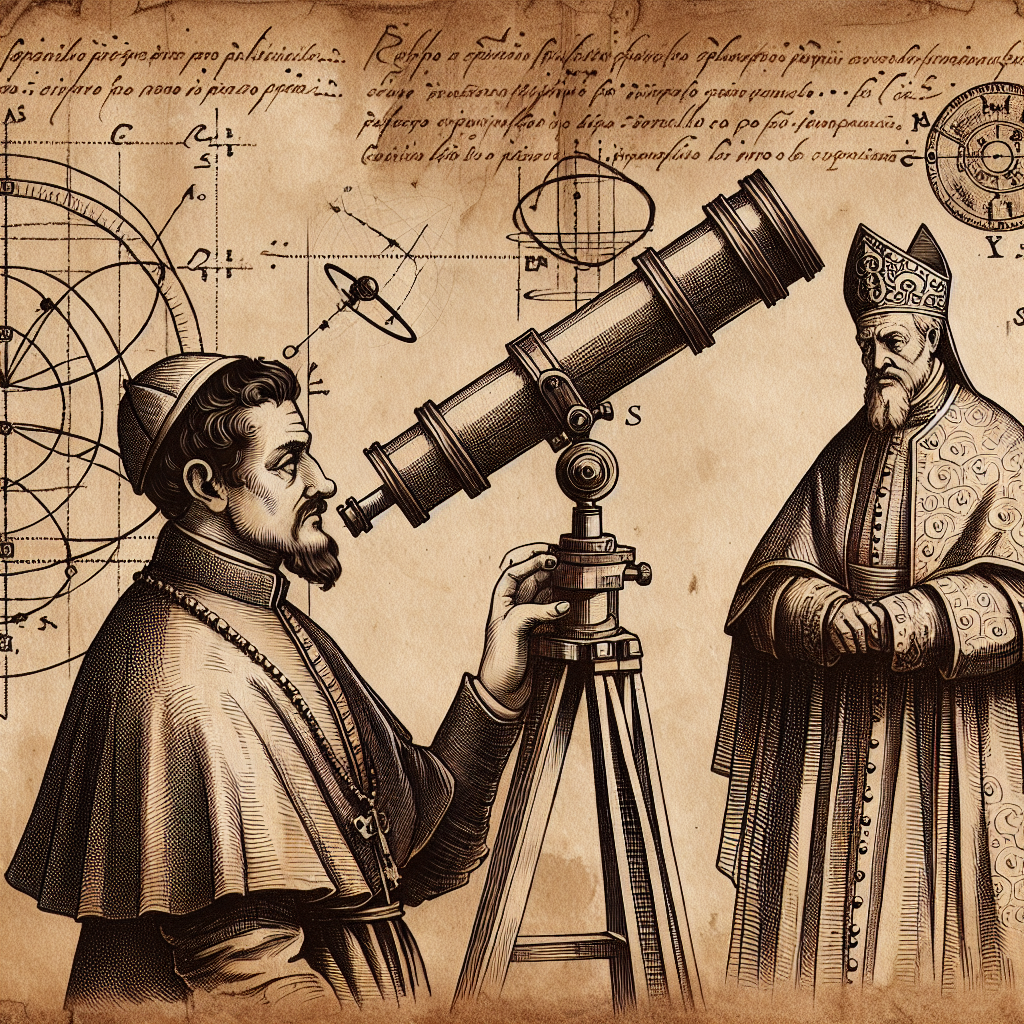
Our #EuropeanBios entry 51 is Galileo Galilei, an astronomer, scientist, physicist, mathematician and jerk who proved that the planets revolve around the sun, which is surprising since it's clear he was firmly convinced that the universe revolved around him.
-
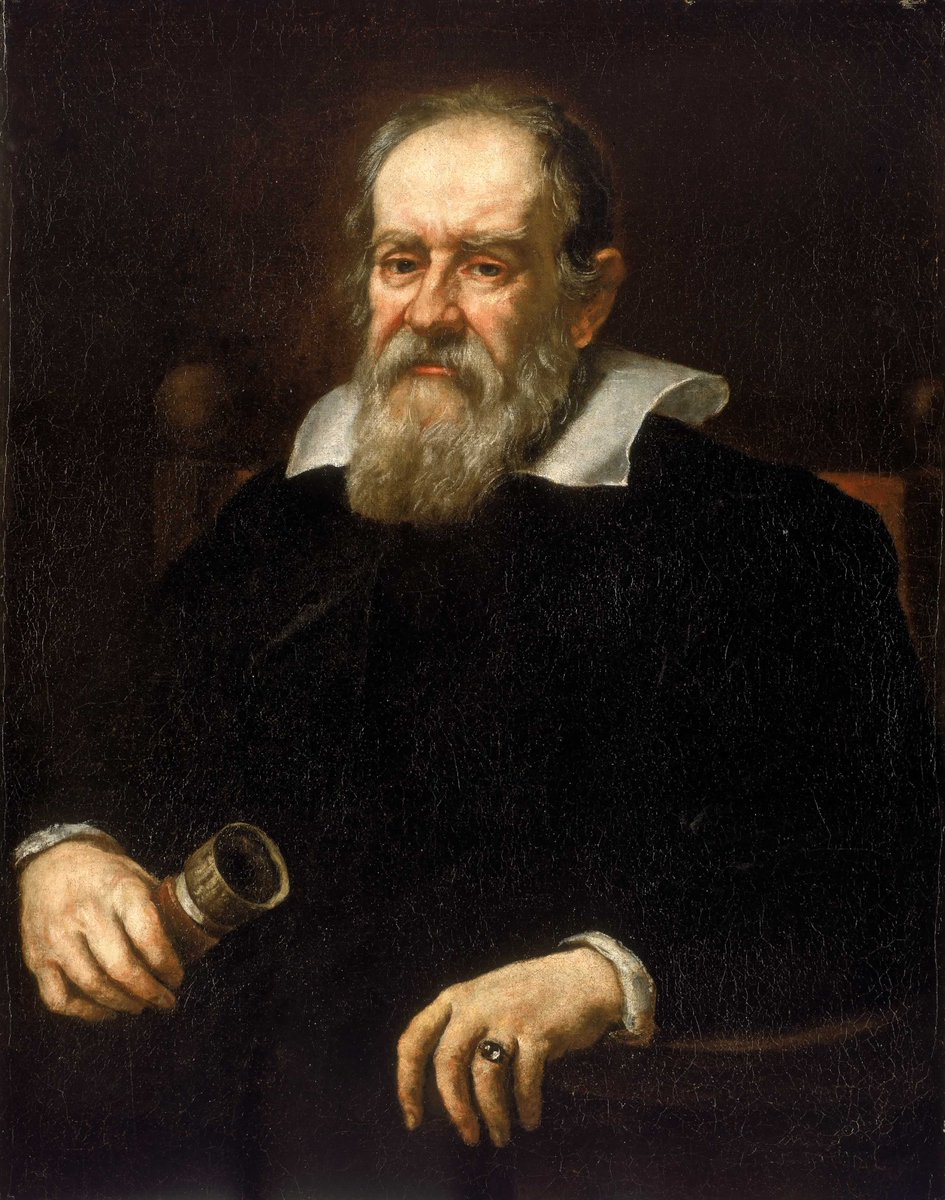
Portrait of Galileo Galilei, Justus Sustermans, 1636 public domain -
When I started this project I hoped to find unexpected connections between the my subjects, and there have been plenty, but Galileo takes the cake. He's connected to almost *everybody*, an intersection of paths thousands of years long. Maybe the universe *did* revolve around him.
-
Path number one is religion. In 30AD or so, Saint Paul had a vision, got very interested in Christianity, and wrote some sensible advice for running a small village in a desert that got taken WAY too seriously.
-
One of those to take Paul way too seriously was Theodosius the Great, in 347AD, who took Christianity from a chill, love-thy-neighbor vibe to declaring other religions heretical and killing people in a single extremely un-cool step.
-
Roughly at the same time as Theodosius, Augustine of Hippo got a hold of Christianity. He was a chill, peace-and-love guy who was extremely horny and believed in magical farts. After giving up on the magical farts idea, he greatly refined Christianity.
-
Unfortunately people also took Augustine way too seriously, just like Paul, culminating in religious fervor resulting in a giant continent-wide war between religions (and, not coincidentally, very profitable looting) starting in the 1100s — embodied perfectly by characters like Reynald de Chatillon:
-
The crusades went on for hundreds of years, reflecting and feeding deeply-ingrained Islamophobia and anti-semitism across Europe, which got completely out of hand when Isabella of Castille created the Spanish Inquisition to root out heresy in 1478:
-
Then things escalated further in 1517 when Martin Luther sent an email to his friends complaining about the Pope, which spiraled out of control into a whole new, non-Catholic religion:
-
This is where we intersect with path number two: government. This path starts back in 272AD, when Constantine decided on his deathbed to become a Christian, making the Roman empire Christian thereafter:
-
That might have been the end of it, because then Rome fell and the dark ages kicked in. But then Charlemagne showed up in 748AD and rebooted European science and culture while being extremely Catholic:
-
Over-simplifying grievously, Charlemagne's success meant the rulers of Europe were Catholic and stayed Catholic for the next thousand years. Which brings us back to the collision with the religion path and Martin Luther's accidental protestant religion.
-
Constantine and Charlemagne had permanently fused religion and government, so protestantism, by opposing Catholicism, created a massive, Europe-wide political upheaval resulting in wars and massacres, such as that perpetrated by Catherine de Medici:
-
Whether a ruler was protestant or Catholic shaped the course of European government, such as Elizabeth 1, whose rise to the throne was because of kicking out a Catholic and whose whole reign became about finding a protestant successor:
-
All of this finally resulted in the Roman Inquisition in 1542, inspired by the Spanish one. The Roman inquisition's purpose was to root out heretical beliefs: protestant ones mainly, but anything else as well. It had the full power of the government.
-
Which brings us to path number 3: science. This starts all the way back in 424BCE, when Aristotle and Plato were among the most influential thinkers alive; specifically Aristotle, who pulled a model of how the universe worked out of his ass and declared that everything revolves around the earth:
-
The Greeks were pretty happy with Aristotle's model because it didn't really make much difference. Then everyone's favorite world-conquering gay boy, Alexander the Great, conquered Egypt and left some Greeks in charge:
-
One of those Greeks was a guy called Ptolemy (in fact they were nearly all called Ptolemy, the Egyptian Greeks were singularly unimaginative with names) who around 100AD made a lot of astronomical observations and came up with a fearsomely complex model of the solar system.
-
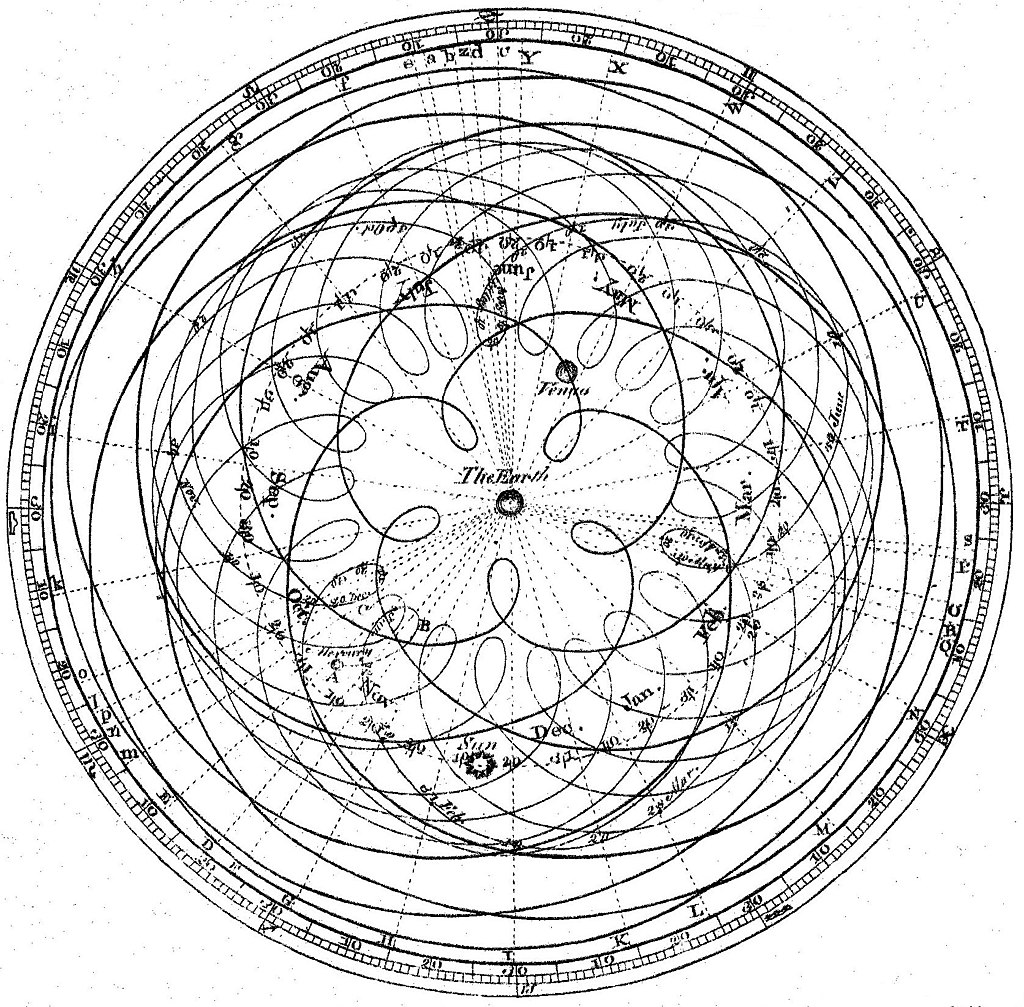
Ptolemaic geocentric model showing the complex epicycles of planetary motion public domain -
Side note: these Greeks-in-Egypt were also the ones who gave birth to Cleopatra, in fact a whole bunch of Cleopatras as well as innumerable Ptolemys. But the astronomer Ptolemy isn't any of these, he came hundreds of years later.
-
Aristotle's theory as elaborated by Ptolemy was accepted as fact for well over a thousand years until Copernicus around 1500AD started looking at the stars in between taxing serfs and realized the math was a lot simpler if you put the sun at the center:
-
Copernicus' theory was however not very popular until Tycho Brahe and Kepler rolled around 50 years later and used new, more accurate instruments to make more accurate observations which allowed them to fix some bugs in the system:
-
Which brings us, at last, to Galileo, where all 3 paths collide. Born in 1564 to a distinguished but somewhat poor family, he initially trained to be a doctor but hated it and switched to mathematics, becoming a university professor in maths and other subjects.
-
Galileo heard about an early version of the telescope invented by a Dutch scientist. He adopted and improved the design, creating telescopes that could, for the first time, pick out details of heavenly bodies invisible to naked eyes. Here the trouble started.
-
Galileo saw mountains on the moon. This doesn't seem like a big deal, but it was a big problem because it suggested the moon was a planet like earth. If there were mountains on the moon, there could be *people* on the moon, and the Bible makes no mention of them.
-
He also saw Jupiter's moons for the first time, and that planets like Jupiter had "phases" like the moon. He saw that sunspots appear to "move around" and disappear around the "back" of the sun as we orbit around it. The heavens were not simple, perfect spheres. More trouble.
-
These and other observations strongly supported the heliocentric view of the universe, and that was a problem because religion held that the earth was the center of the universe, and religion and government were the same thing, and both were actively hunting down heretics.
-
The reason *why* it was Catholic doctrine that the earth was the center of the universe is actually really flimsy. There are only a couple of verses in the whole Bible that make any reference to the motion of the sun and earth, and they were open to interpretation.
-
Many people, including Galileo himself, tried to make the case that religion should not anchor itself to models of the universe made 2000 years earlier, lest they turn out not to be true, thus rendering the religion incorrect over physical questions not relevant to faith.
-
But the Roman Inquisition was not interested in being intellectually flexible, they were interested in finding heretics and putting them in prison forever. They told Galileo his model of the universe was very interesting, but to shut the fuck up about it forever, please.
-
And honestly if Galileo had left it there he'd have been fine. It was clear that scientists everywhere were reaching the same conclusion about how planets moved, he was already recognized as pivotal to that discovery, there was no reason to force the issue. But he did.
-
To understand why Galileo pushed his luck it's important to understand: Galileo was a huge jerk. He was self-important, money-grubbing, attention-seeking, and endlessly stealing all the credit for things that other people had worked on and he'd merely contributed to.
-
Galileo had a couple of daughters whom he regarded primarily as expensive problems. To avoid paying huge dowries to marry them off, he instead paid much less to have them sent to convents for their whole lives, where they were both miserable and constantly said so.
-
(Those convents, incidentally, were run by one of the religious orders founded by Francis of Assisi, as if Galileo wasn't already connected enough to all of my previous subjects: TKTKTK )
-
With his daughters out of the way he was free to pursue his passion: being very important. He sucked up to local rulers, securing higher and higher salaries and titles and money and fame and adulation. He was all about being a world-famous scientist and wanted everyone to know.
-
To pick one example: when he discovered the moons of Jupiter, he named them the "Medicean stars" in an effort to suck up to Cosimo de Medici, whom he'd taught as a child and was now the very wealthy ruler of Tuscany. It worked, and Cosimo gave him a job.
-
Galileo also managed to suck up to Maffeo Barberini, who later became Pope Urban VIII. This was useful to a man toying with beliefs that appeared to conflict with church doctrine. But not, it turned out, useful enough.
-
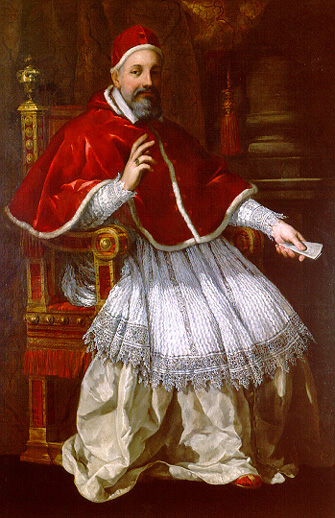
Portrait of Pope Urban VIII, Pietro da Cortona, c.1627 public domain -
So it is with this context of the kind of man Galileo was that we must interpret his behavior when the Roman Inquisition told him that they would leave him completely unharmed as long as he shut the fuck up about the planets moving around the sun.
-
He managed to shut up for a while but eventually he published a book "Dialogue Concerning the Two Chief World Systems", framed (as was common for philosophical works) as a conversation between 3 people about the heliocentric and geocentric models.
-
Even this was okay with the Pope, Galileo was told, as long as he was careful to portray both sides as equally valid and not come down in favor of heliocentrism. He was given specific language to include in the dialogue, though it wasn't specified who should say it.
-
One of the characters in the dialogue is called Simplicio, the name of a famous Aristotelian philosopher but also, in Italian, it sounds like "Simpleton". Simplicio spends the whole dialogue asking stupid questions, and Galileo had him say the words about the systems being equal.
-
This is by no means the only time Galileo absolutely failed to portray the systems as equally valid in his book. The characters call believers in geocentrism fools and idiots the whole way through. The book is a case for heliocentrism, which Galileo had been told not to make.
-
Galileo was called before the Roman inquisition to defend this, and his defense was to play dumb. He had no intention, he declared, that giving the words to the idiot character would give readers the impression that the words were idiotic. It was... unconvincing.
-
And yet such was Galileo's fame and respect that the Roman inquisition *still* didn't throw him in prison. Instead of convicting him of heresy, he was found "vehemently suspect of heresy", a lighter sentence that was immediately commuted to permanent house arrest.
-
To achieve this, Galileo had to declare that he had been in error, that he did not hold that the sun was the center of the universe, and he would "abjure, curse and detest" that opinion. His book was banned, and he was not allowed to publish or speak in public ever again.
-
This means that heliocentrism was never technically declared heresy, because the heresy of which Galileo was "vehemently suspect" was never spelled out officially. But everybody knew what they'd meant, and fear kept heliocentrism effectively silenced for at least a century.
-
There is a myth that after being sentenced, Galileo muttered "E pur si muove" ("And yet it moves") in a final act of defiance. He definitely did not do this. If he had they would have killed him. He sucked it up and denied his beliefs, at least publicly.
-
All of this is pretty silly! There was no reason that government should require that religion be correct, no reason that religion should require the earth to be the center of the universe, but two thousand years of momentum collided in one guy who just wouldn't let it go.
-
And in fairness it worked out for him! Everybody knows who Galileo is, and gives him credit for things he didn't do, like inventing telescopes or creating the heliocentric system. He lived mostly in comfort until the age of 78, rich, famous and respected.
-
Galileo's legacy is a huge pile of science other than just heliocentrism, which shouldn't be ignored, but more so it is the founding of the myth of the scientist speaking truth to power, which he absolutely did not do, but gets the credit for anyway, which is very Galileo of him.
-
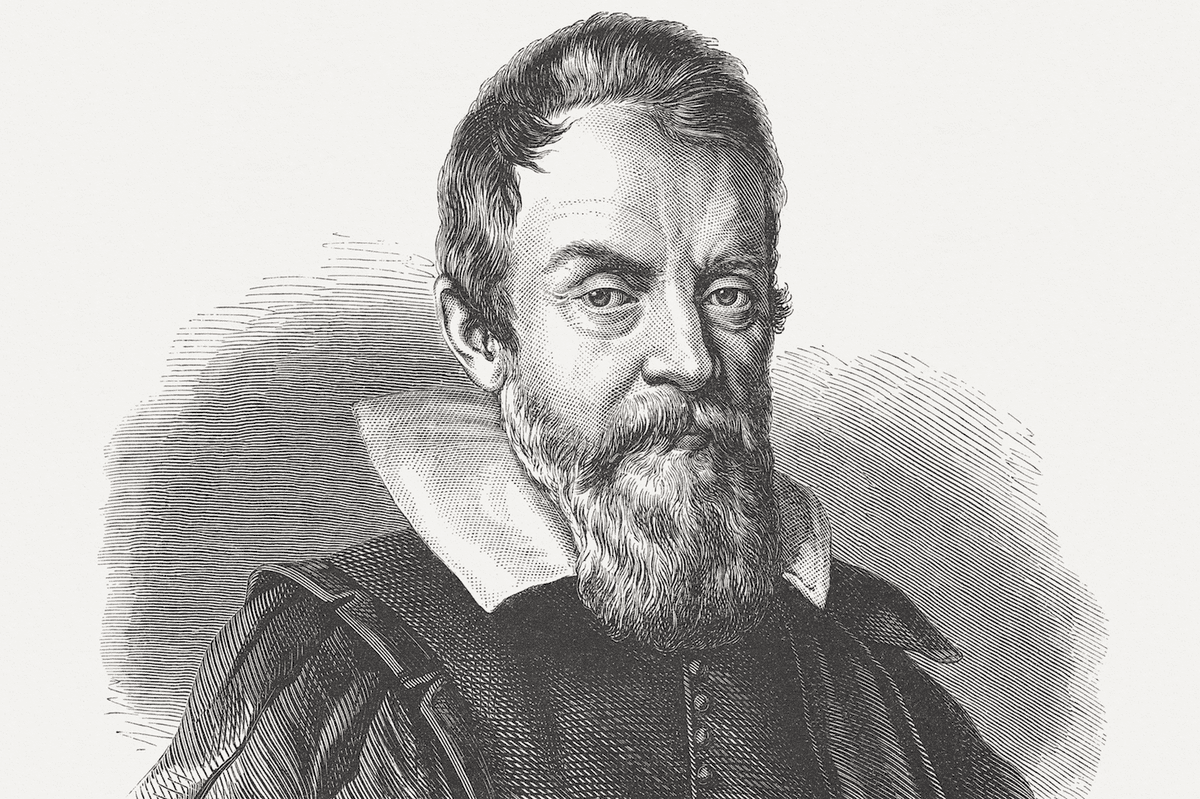
Portrait of Galileo Galilei, engraving, c.17th century public domain
- Previously: Shakespeare
- Next: Descartes
- Full list
Text and images copyright © 2020-2023 Laurie Voss
except where indicated
except where indicated